
Second Chance Apartments Denver, CO
A second chance apartment in Denver is a home where the landlord looks past your record. These places may say yes even with bad credit, an old eviction, a broken lease, or rental debt. You are not stuck.
Find Your Best Apartment
Share a few details so we can match you with a home you’ll truly love
You are not alone. Many people in Denver rent again after a hard time. This guide shows you simple steps. It uses easy words. It helps you find a safe home and start fresh.
Real Second Chance Housing Options in Denver
Important: Rules and prices change every month. Open units fill fast. Always call first. Ask what they accept right now. Never send money before you see the home. The places below are real and a good place to start.
Second Chance Center / Residences on Acoma
- Type: Supportive housing for people leaving jail or prison, in the Overland area of Denver.
- Apply through: Second Chance Center (search “Second Chance Center Colorado” online).
- Help line: Colorado Housing Connects, 1-844-926-6632 (free).
- Rent Range: Income based. Made for low income renters.
- What They Accept: Past criminal records and reentry needs.
- Deposit: Based on the program. Ask when you apply.
- Bedrooms Available: Studio and small units (call to confirm).
Dakota Property Management
- Address: 14143 Denver West Pkwy, Ste 100, Golden, CO 80401
- Phone Number: (303) 759-4340
- Rent Range: Varies by home, often $1,200 to $2,000/month.
- What They Accept: Reviews each person one by one. They honor Colorado portable screening reports, which can save you fees. Be honest about your history and ask about each home.
- Deposit: Based on credit and the home.
- Bedrooms Available: Studio, 1BR, 2BR, 3BR (changes often).
Private Landlords and Locators (Denver Metro)
- Where to look: Facebook Marketplace, Craigslist “by owner,” and local second chance locators.
- Phone Number: Use Colorado Housing Connects, 1-844-926-6632, to get pointed to landlords.
- Rent Range: Often $1,000 to $1,500/month for studios and 1BR.
- What They Accept: Bad credit, broken leases, and many evictions, case by case.
- Deposit: Often flexible or negotiable.
- Bedrooms Available: Studio, 1BR, 2BR.
What Are Second Chance Apartments?
A second chance apartment is not a special building with a sign out front. It is a home run by a landlord who will rent to people with a rough past. Most landlords use a computer to score you. That score can shut the door fast. A second chance landlord looks at the whole person. They look at your job. They look at if you can pay rent now.
Think of it like a job. One bad year does not make you a bad worker. A fair boss looks at how you work today. A second chance landlord does the same. They give people room to grow. In Denver, these homes run from big complexes to small private units.
Who Qualifies for Second Chance Leasing in Denver?
Second chance leasing is for renters who hit a wall. You may qualify if you have one of the problems below. You do not need a perfect past. You just need to show you can pay and care for the home.

Past Evictions
An eviction is when a court made you leave a home. It stays on your record. Old evictions are easier to work with than new ones. If yours is more than a year old, more doors open. Bring proof if you paid what you owed.
Broken Leases
A broken lease means you left before the lease ended. Maybe you lost a job. Maybe you had to move for family. A short, honest letter helps a lot. Colorado law also limits what a past landlord can charge you, so ask questions.
Bad Credit
Bad credit is very common. Medical bills, old cards, or rent debt can drop your score. A score under 600 scares many landlords. Second chance landlords care more about your income today. They want to know rent will get paid each month.
Criminal Records
A criminal record can make renting hard. Small charges are often passed over. Bigger ones may need a special landlord or a private owner. Some Denver programs are built just for people leaving jail or prison. Help is out there.
Types of Second Chance Rentals in Denver
There are three main kinds of second chance homes in Denver. Each one works in its own way. Knowing them helps you aim your search.
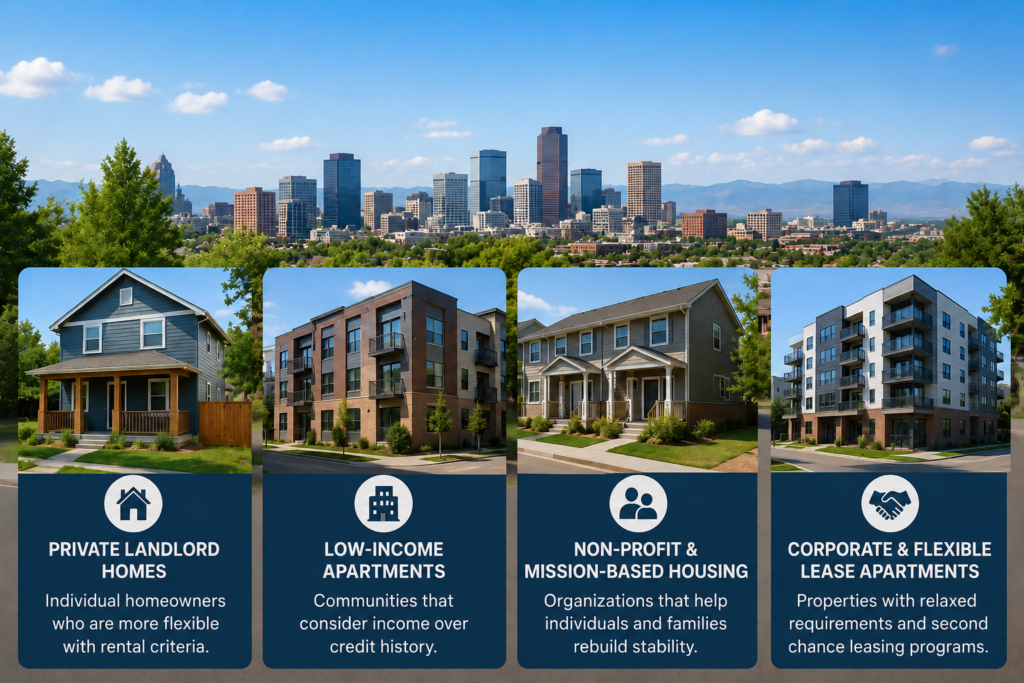
Private Landlords (Rent by Owner)
This is your best bet. A private landlord owns the home and makes the call. No big computer score. They can say yes on the spot. You can find them on Facebook, Craigslist, or by asking around. A steady job and a kind, honest talk go a long way here.
Corporate “Tiered Acceptance” Communities
Some large companies use tiers. They may take a lower score or an older eviction. But they often ask for more money up front. This can be a bigger deposit, like one or two months of rent, or a small risk fee. Ask for the exact rules before you apply.
No Credit Check & Extended-Stay Rentals
No credit check homes are rare but real. Many are weekly or monthly stay hotels. They work like a hotel. If you pay, you stay. Furnished monthly rentals also skip the credit check. These make a great bridge while you fix your credit.
How Denver Landlords Evaluate Evictions and Bad Credit
Most Denver landlords look at your court records and your credit. But they do not all read them the same way. Big brands use strict rules. Small owners use their own judgment. They often ask one simple thing: will this person pay rent on time?
How the Age of an Eviction Affects Approval
Time helps you. A new eviction from last month is the hardest. An eviction from three or four years ago is much softer. Landlords also ask why it happened. A job loss reads very differently than damage or fights. If you paid the balance, say so. Bring the paper that proves it.
Ownership Types That Tend to Be More Flexible
Some homes bend more than others. You will have better luck with small buildings, duplexes, triplexes, and condos owned by one person. Shiny new luxury towers use strict computer screening. Older buildings and private owners give real people a real look.
Common Approval Barriers (and How to Overcome Them)
- Knowing why you get a “no” helps you turn it into a “yes.” Here are the big blocks and simple ways past them.
- A very recent eviction. Wait if you can, or use a private owner. Offer a bigger deposit to lower their worry.
- Money you still owe. Many big buildings auto deny if you owe an old landlord. Pay it off if you can, or set up a plan and keep the proof.
- Low income. Most homes want you to earn about three times the rent. If rent is $1,200, they want about $3,600 a month. A co-signer or roommate can help you reach it.
- A serious record. Look for ban the box landlords and reentry programs. They are built for this and will not slam the door.
How to Find Second Chance Apartments in Denver
Finding these homes is part smart search and part talking to people. Do not just scroll big rental apps. Find the homes that already say yes to people like you.
Best Neighborhoods to Search (Aurora, Lakewood, Federal Heights, East Colfax)
Look where rents are softer and owners are local. Try Aurora, Lakewood, Federal Heights, and parts of East Colfax. These areas have more older buildings and private owners. The fancy towers downtown are the hardest to enter, so skip them for now.
Search Filters and Keywords That Work
Words matter when you search online. Try these: “by owner,” “no credit check,” “bad credit OK,” and “flexible lease.” Pick “utilities included” if your credit is low. New gas and power accounts can ask for extra deposits, so this saves you cash.
Working With a Second Chance Apartment Locator
A locator knows which homes say yes this month. They keep lists that change with empty units. When a building has many open units, it may loosen its rules to fill them. A good locator points you straight to those homes and saves you wasted fees. Many are free to renters.
Steps to Get Approved
Treat your search like a job interview. Come ready. Be honest. Show up calm and clear. These steps make landlords feel safe saying yes.
Documents to Prepare Before You Apply
Bring proof of income, like three months of pay stubs or bank records. Add a letter from your boss on company paper. Add a few reference letters from past landlords, a boss, or a faith leader. Write a short note that explains your past in a calm, simple way.
Using a Guarantor or Co-Signer
A co-signer is a person with good credit who signs with you. If you cannot pay, they agree to. This lowers the landlord’s worry by a lot. No friend or family with good credit? Guarantor services can act like insurance for the landlord for a fee.
Tips to Strengthen Your Application
Money talks. Offering an extra month of rent up front is the single best way to beat bad credit. Tell the truth before the background check finds it. Try saying: “I had an eviction in 2022 after a job loss. I have worked steady for two years since.” Honesty builds trust fast.
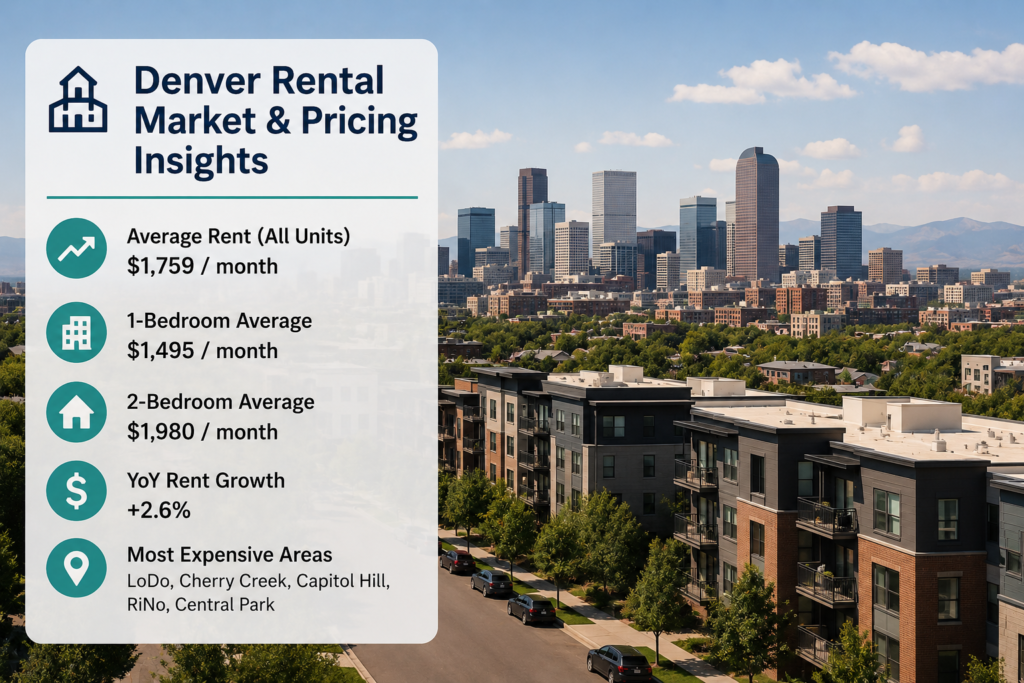
Denver Rental Market & Pricing Insights
Denver is not cheap, but you can find a deal. Plan on about $1,000 to $1,300 for a decent one bedroom in a second chance friendly home. Set a budget before you tour. A simple rule is to keep rent near a third of your pay. The small table below shows that math.
| Monthly Income | Safe Rent (about 1/3) | What You Can Look For |
| $2,000 | About $650 | A room or shared home |
| $3,000 | About $1,000 | A studio or small 1BR |
| $4,500 | About $1,500 | A solid 1BR or 2BR |
Second Chance Apartments Under $1,000
Yes, homes under $1,000 do exist in Denver. Most are studios or older units. Some are rooms for rent. They may be small, but they get your foot in the door. Look in Aurora and Federal Heights first. A small home now can lead to a bigger one later, once your record looks better.
Local Reentry & Housing Support Resources
You do not have to do this alone. Denver has free help. Save these names. Call them when you feel stuck.
Colorado Housing Connects (1-844-926-6632) is a free help line for renters. Second Chance Center helps people leaving jail or prison find housing and work. Denver Housing Authority runs Section 8 and low cost homes. Colorado Coalition for the Homeless helps people at risk of losing a home. You can also dial 2-1-1 for fast local housing help.
Frequently Asked Questions
What does “second chance apartment” mean?
It means a home where the landlord will rent to people with a hard past. This can include bad credit, evictions, broken leases, or a record. They look at your whole life, not just a score.
Are second chance apartments legit?
Yes, many are real and helpful. But watch for scams. Never wire money before you see the home. Never pay a fee for a list with no real address. Use trusted help lines and real landlords.
Can you rent in Denver with an eviction on your record?
Yes. Many people do. It is easier if the eviction is old and the balance is paid. Private owners and small buildings are your best path.
What credit score do you need to rent in Colorado?
Big landlords often want 620 or more. Second chance homes may take scores in the 500s. Some take no score at all if you show steady income.
Will unpaid eviction balances affect approval?
Yes, they can. Many big buildings auto deny if you still owe an old landlord. If you can, pay it off. Keep proof. A short note explaining the debt also helps.
How long do evictions stay visible to landlords?
Evictions can show up for several years. The exact time depends on the report. The good news is that older evictions count against you less.
What salary do you need to afford rent in Denver?
Most landlords want income near three times the rent. For $1,500 rent, that is about $4,500 a month, or roughly $54,000 a year. A co-signer or roommate can help you meet this.
A Fresh Start Is Within Reach
Your past does not own your future. A hard year is just one chapter, not the whole book. Many people in Denver have rented again after an eviction, bad credit, or a record. They took small steps. They asked for help. They stayed honest and kept going.
You can do the same. Start today. Pull your records. Save a little extra for a deposit. Gather your letters. Call a help line if you feel lost. Be kind to yourself along the way. One steady step at a time, a safe home is waiting for you. You deserve it.