
Second Chance Apartments Boston
You deserve a safe and stable home. Even if you have an eviction, bad credit, a broken lease, or a criminal record, housing is still possible in Boston. This guide will show you exactly where to look, how to qualify, and how to get approved. You are not alone, and you are not out of options.
Find Your Best Apartment
Share a few details so we can match you with a home you’ll truly love
Real Second Chance Apartment Listings in Boston
Park 151 Apartments
Address: 151 Tremont Street, Boston, MA 02111
Phone Number: (617) 422-0151
Rent Range: $1,800 – $3,500/month
What They Accept: Bad credit, rental history issues, case-by-case eviction review
Deposit: Flexible, based on credit screening
Bedrooms Available: Studio, 1BR, 2BR
The Viridian
Address: 2 Charlesgate West, Boston, MA 02215
Phone Number: (617) 236-0077
Rent Range: $2,100 – $4,200/month
What They Accept: All credit types, broken leases reviewed individually, income-focused approval
Deposit: Negotiable based on background review
Bedrooms Available: Studio, 1BR, 2BR
Cosign Partners Boston Network
Address: Serving Greater Boston Area, MA
Phone Number: (888) 828-2265
Rent Range: $1,400 – $3,000/month
What They Accept: Evictions, broken leases, rental balances, foreclosure, bankruptcies, bad credit
Deposit: Flexible, cosigning service available
Bedrooms Available: Studio, 1BR, 2BR, 3BR
What Are Second Chance Apartments in Boston?
Second chance apartments are rental homes that say yes when others say no. They welcome people who have had hard times. A landlord who offers a second chance knows that life is not always easy. They look at your full story, not just a number on a screen.
Boston is a big city with over 667,000 people. There are more than 272,000 housing units across the city. But most of those landlords use strict rules. They reject people with low credit scores or old evictions right away. Second chance rentals work differently. They give you a real shot.
How They Differ from Regular Apartments
Most large apartment buildings use an automated system. This system scans your credit report, rental history, and background check. If it finds one problem, it rejects you. There is no human to talk to. There is no way to explain your story.
Second chance landlords do not work that way. They review applications one by one. A person reads your file. They look at who you are today, not just what happened years ago. They may still ask questions. But they give you the space to answer.
Who They Are Designed to Help
Second chance apartments help people who have been through tough times. They help people who lost a job and could not pay rent. They help people who went through a divorce or a health crisis. They help people who owe money to an old landlord or have a court case on file.
Think of someone like Maria. She lost her job during a hard year. She fell behind on rent and ended up with an eviction. Now she works full-time again. She has a steady income. But every apartment she applies to turns her away because of that old eviction. A second chance apartment sees her effort. It sees her income. It gives her a home.
Common Reasons Boston Renters Get Denied
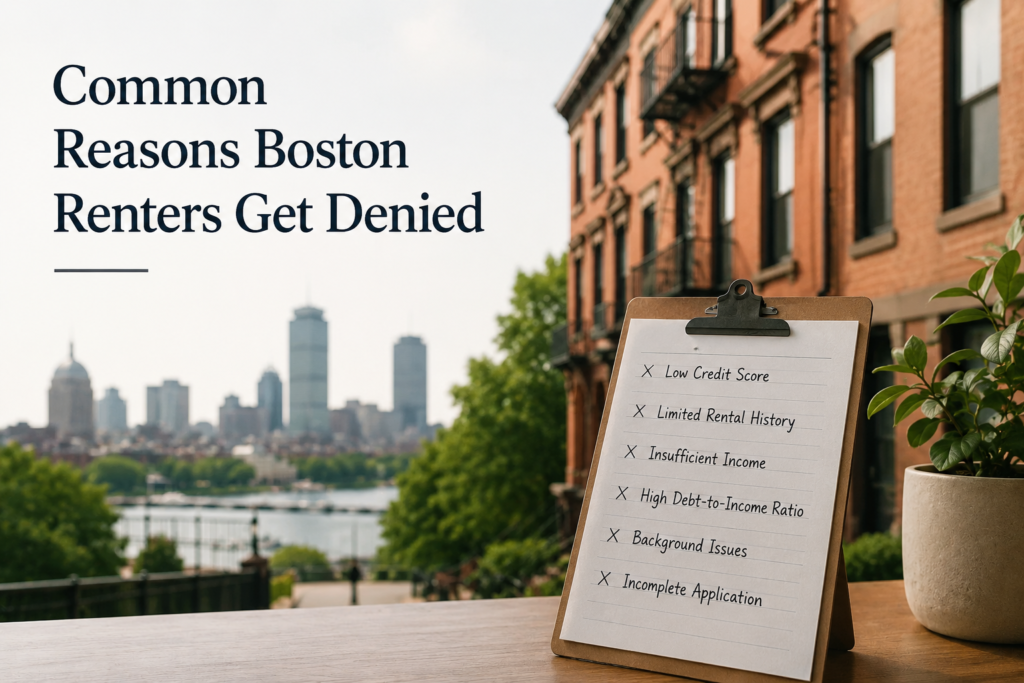
Boston landlords are careful. Many use strict rules. Knowing why you got denied helps you find the right place.
Evictions and Eviction Filings
An eviction is when a judge orders a tenant to leave a rental home. This happens most often when rent goes unpaid. But it can also happen when a tenant breaks a lease rule. An eviction becomes a public record. It shows up on tenant screening reports like CoreLogic and LexisNexis. It can stay on those reports for up to seven years. Even a filing, where the landlord started the process but you left before court, still appears. This is why so many renters get rejected in Boston.
Broken Leases and Unpaid Rental Balances
A broken lease happens when you move out before your lease ends and owe money. Maybe you had to leave because of a family emergency. Maybe you lost your job. Whatever the reason, that balance usually goes to a collection agency. It then shows up on your credit report as rental debt. When a new landlord sees this, they worry. They think you might leave them with unpaid bills too. This is one of the most common reasons Boston renters get rejected.
Bad Credit Scores and Collections
Many Boston landlords want to see a credit score of 650 or higher. Medical bills, student loans, and credit card debt can drop your score fast. One bad year can push you below what most landlords accept. Second chance landlords look past the score. They focus more on your income right now. They want to know if you can pay rent today, not what happened three years ago.
Criminal History: Misdemeanors and Felonies
A criminal record makes renting hard. Landlords run background checks that go back seven years for felonies. Large apartment buildings often say no right away. But second chance rentals look at the type of offense, how long ago it happened, and what you have done since. Non-violent crimes that are several years old get more consideration. Private landlords are often more flexible than big corporate buildings.
How to Qualify for a Second Chance Apartment in Boston
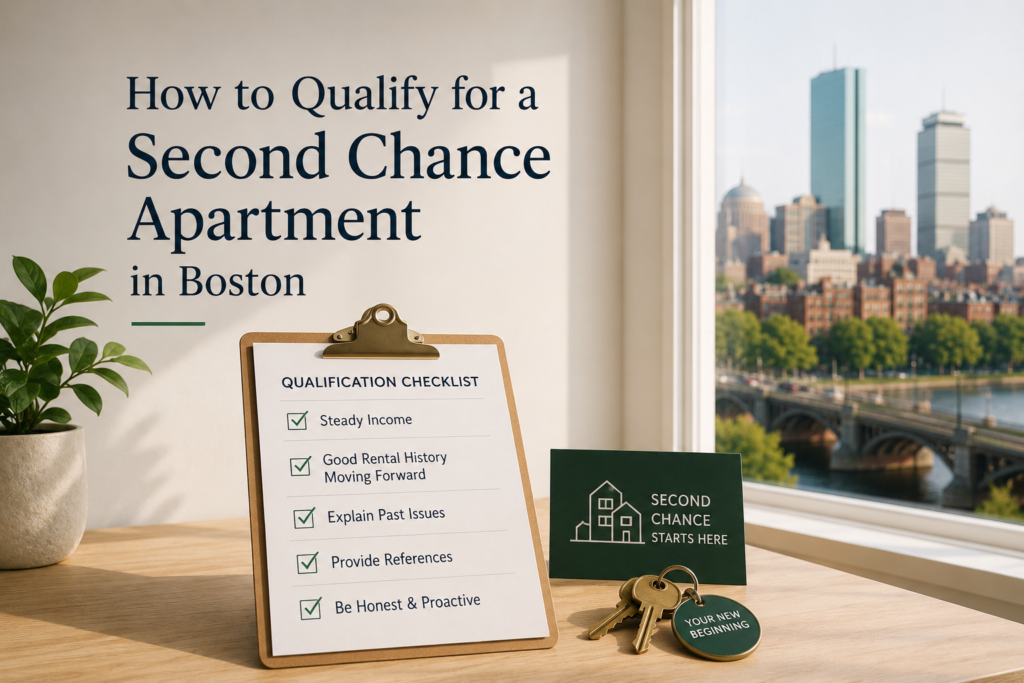
Second chance apartments still have standards. But they look at different things.
Income Requirements: The 3x Rent Rule
Most Boston landlords, including second chance ones, use the 3x rent rule. This means your monthly income should be at least three times the rent. If the rent is $1,500 per month, you need to show $4,500 per month in income. If your credit is low, having income above this number helps a lot. Some second chance landlords accept non-traditional income like freelance work, disability payments, or child support, as long as you can prove it.
Minimum Credit Score Second Chance Landlords Accept
Standard Boston apartments want 650 or above. Second chance rentals often accept scores as low as 500. Some accept applicants with no credit at all. The key is your current financial picture. If you have steady income and a low score, that tells a better story than a middling score and unstable work history.
How Long After an Eviction Can You Rent Again?
Many second chance landlords start working with you after your eviction is one to two years old. The older the eviction, the better your chances. If you have had stable housing or stable income since then, your chances go up even more. Some programs accept recent evictions if your current situation is strong and you can pay a higher deposit.
What Documents You Need to Prepare
Being ready with your paperwork shows a landlord you are serious. Here is what most second chance landlords want to see:
| Document | Why It Matters |
| Pay stubs or bank statements | Proves current income |
| Government-issued ID | Confirms identity |
| Reference letters | Shows good character |
| Proof of stable address (last 2 years) | Shows rental history |
| Written explanation of past issues | Shows honesty and growth |
| Settlement or payment plan for rental debt | Shows good faith effort |
How to Find Second Chance Apartments in Boston
Finding the right apartment takes some strategy. Boston is competitive. But the right approach opens doors.
Using Apartment Locator Services
Apartment locator services specialize in finding rentals for people with tough histories. They know which landlords in Boston accept evictions, broken leases, and bad credit. They save you time and money because you stop applying to places that will reject you. Services like Boston Apartment Locators and Cosign Partners work directly with their networks to match you with willing landlords. Many of these services are free for renters.
Private Landlords vs. Large Apartment Complexes
Large apartment buildings use automated software. That software often rejects you before a human even sees your file. Private landlords work differently. They make their own decisions. They meet you. They hear your story. They can say yes when the big buildings say no. Searching for privately owned units in Boston, especially in smaller multi-family homes, gives you a much better shot. Look on Craigslist, Facebook Marketplace, and local community boards for private listings.
Best Neighborhoods and Nearby Cities to Search
Boston itself is a great place to start, but do not limit yourself. Some nearby cities have more affordable rents and more flexible landlords. Chelsea, Quincy, Somerville, Brookline, Newton, Waltham, and Dedham all have second chance rental options. These areas give you access to public transportation and Boston jobs without the highest Boston rents.
Online Platforms and Search Terms That Actually Work
When you search online, use specific words. Search for “second chance apartments Boston,” “no credit check apartments Boston MA,” “apartments that accept evictions Boston,” or “2nd chance rentals near me.” These terms bring up listings and services that are actually set up for your situation. General searches like “Boston apartments for rent” will mostly show places with strict requirements.
Tips to Strengthen Your Application and Get Approved
A strong application can change everything. Here is how to stand out.

Be Honest About Your History Upfront
Do not try to hide your eviction or bad credit. Landlords will find out. Being honest first shows respect. It saves you from wasting money on application fees at places that would say no anyway. Before you apply, call the leasing office and say something like: “I have an eviction from two years ago. My income is steady now. Is this something you can work with?” That one conversation saves you a lot of time.
Offer a Higher Security Deposit
Money helps build trust. If your credit is low, offering to pay two months of security deposit instead of one tells the landlord you are serious. It shows you have savings. It reduces their worry about risk. Not every landlord will need this. But when one is on the fence, it can tip the decision in your favor.
Write a Cover Letter That Explains Your Situation
A short, honest cover letter goes a long way. Keep it to one page. Explain what happened. Be specific but brief. Then show what changed. For example: “I went through a job loss in 2022 that led to an eviction. Since then, I have held steady employment for 18 months and have not missed a payment. I am ready to be a good tenant.” This letter gives the landlord a reason to say yes.
Build Proof of Current Stability
Every piece of evidence helps. Bank statements that show consistent deposits. Pay stubs from a current employer. A letter from your boss. A personal reference from a pastor, counselor, or community leader. The goal is to paint a clear picture of who you are right now. Your past record shows one chapter. Your stability documents show the rest of the story.
Second Chance Apartment Options Near Boston
You do not have to stay inside Boston city limits. Many nearby areas have good options.
Chelsea, Quincy, and Somerville
Chelsea is right next to Boston. It has lower rents and many private landlords. Quincy is a bit south and is connected to Boston by the Red Line subway. Somerville has a growing community and a mix of private homes and smaller buildings. All three cities have landlords who are more willing to work with renters who have past issues.
Brookline, Newton, Waltham, and Dedham
Brookline sits right on Boston’s border. It has strong public transit and some flexible private landlords. Newton and Waltham are a little farther out but have more affordable options. Dedham is a quiet suburb with lower competition for apartments. In all these areas, look for small multi-family homes. The owners of these homes are often individuals, not companies. Individual landlords tend to give more personal consideration.
Affordable vs. Luxury Second Chance Units
Second chance apartments are not all the same. Some are basic and affordable. Some are actually quite nice. The defining feature is not the quality of the apartment. It is the flexibility of the landlord’s approval process. You can find second chance rentals that range from a $1,400 studio to a $3,500 two-bedroom. What matters most is that the landlord is willing to look at your full picture.
Massachusetts Tenant Rights You Should Know
Knowing your rights helps you navigate the process with confidence.
What Landlords Can and Cannot Ask About Criminal History
Massachusetts follows fair chance housing principles. Landlords can run background checks. But they cannot automatically reject you just because you have a record. They must look at the nature of the offense, how long ago it happened, and how it relates to being a tenant. Boston passed its own CORI (Criminal Offender Record Information) guidelines to protect renters from blanket rejections based on criminal history.
How Long an Eviction Stays on Your Record in MA
In Massachusetts, eviction records filed with the court become public records. They can appear in court databases for years. Tenant screening companies like CoreLogic can include them in reports for up to seven years. However, older evictions carry less weight. If your eviction is more than two years old and you have had stable housing since, many second chance landlords will still work with you.
Renter Protections Under Massachusetts Housing Law
Massachusetts has some of the strongest renter protections in the country. Landlords must follow proper legal steps before an eviction. They cannot lock you out without a court order. They must give proper notice. If you feel you were wrongfully evicted, you have the right to get legal help. Organizations like Greater Boston Legal Services and Massachusetts Legal Aid offer free or low-cost help to renters who need it.
Conclusion
Your past does not have to define your future. People all over Boston rebuild every single year. They find good homes. They start fresh. They show the world who they have become. You can too. Take one step at a time. Gather your documents. Be honest with landlords. Use the right search tools. And keep going, because the right door is out there waiting for you.
Frequently Asked Questions
Can I rent in Boston with an eviction on my record?
Yes. Many renters in Boston successfully rent again after an eviction. The key is to look for second chance landlords, private rental owners, and apartment locator services that specialize in difficult histories. An eviction that is one to two years old, combined with stable current income, gives you a real chance.
What credit score do second chance apartments in Boston accept?
Most second chance apartments in Boston accept credit scores as low as 500. Some accept applicants with no credit history at all. The focus is on your current income and ability to pay, not just your score. Always ask before you apply so you do not waste money on application fees.
Do second chance apartments charge higher deposits?
Yes, in most cases. A second chance landlord takes on more risk when they approve someone with a tough background. They often ask for a higher security deposit, sometimes equal to two months of rent. This is their way of protecting themselves while still giving you a chance. Think of it as a short-term investment in your long-term housing stability.
Can I get approved with a felony in Massachusetts?
It depends on the felony. Non-violent offenses that are several years old give you a better shot. Massachusetts law requires landlords to consider your full situation, not just the record itself. Large corporate buildings are harder. Private landlords are more flexible. Working with an apartment locator who knows which landlords accept applicants with felonies saves you time and energy.
How long does an eviction stay on my background check?
An eviction can stay on tenant screening reports for up to seven years. But its impact weakens over time. Many second chance landlords will overlook an eviction that is two or more years old, especially if your current situation is stable. Paying off any outstanding rental debt, even in a payment plan, can also help reduce its impact.
Are second chance apartments safe and well-maintained?
Yes. The term “second chance” refers to the landlord’s approval standards, not the quality of the apartment. Many second chance rentals are clean, well-kept, and in good neighborhoods. Always visit the property before signing. Drive by at different times of day. Check the building’s condition. Ask current tenants about their experience. Use a trusted apartment locator who knows which properties are well-managed.